
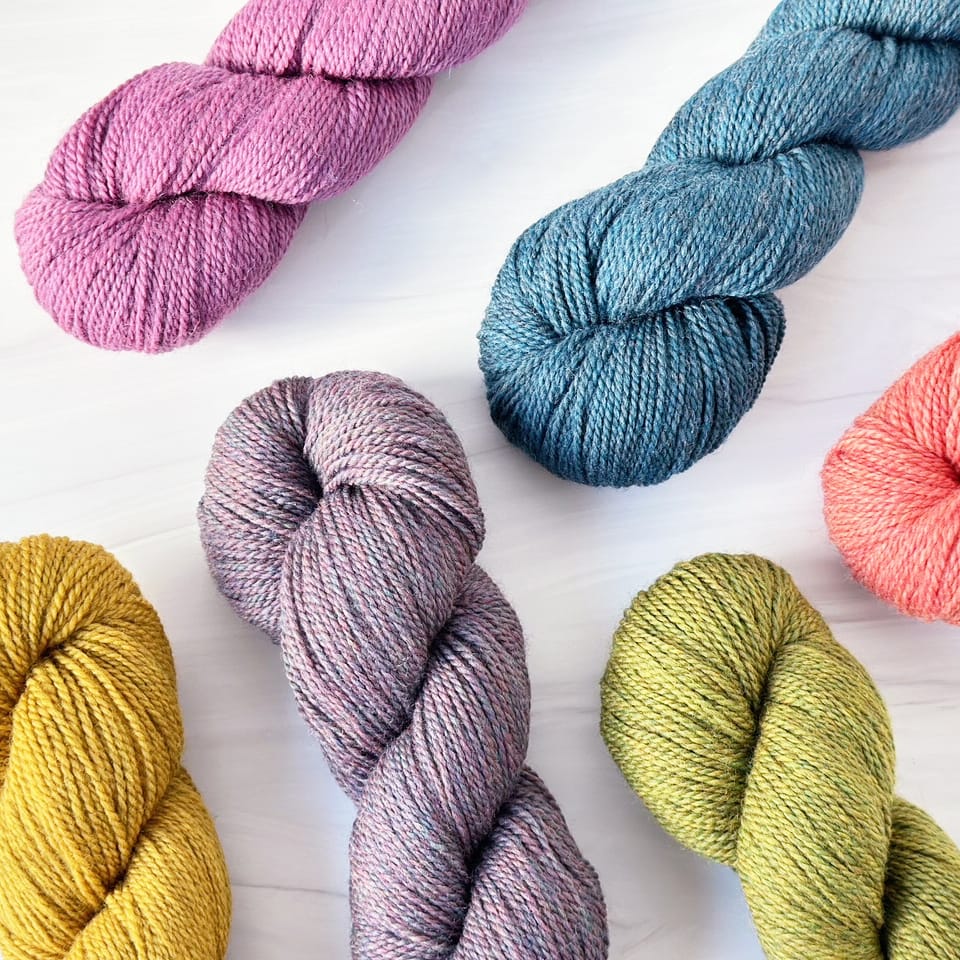

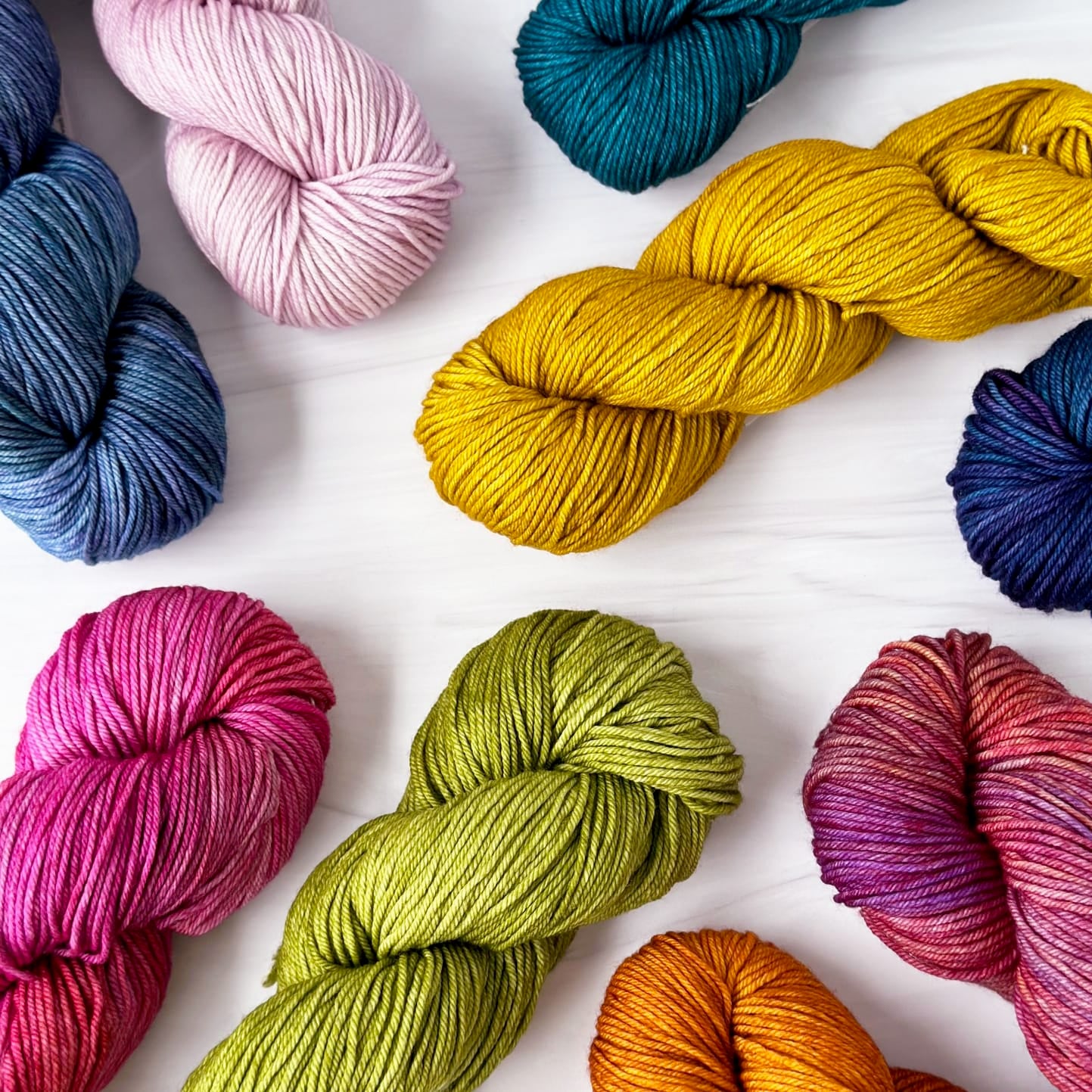

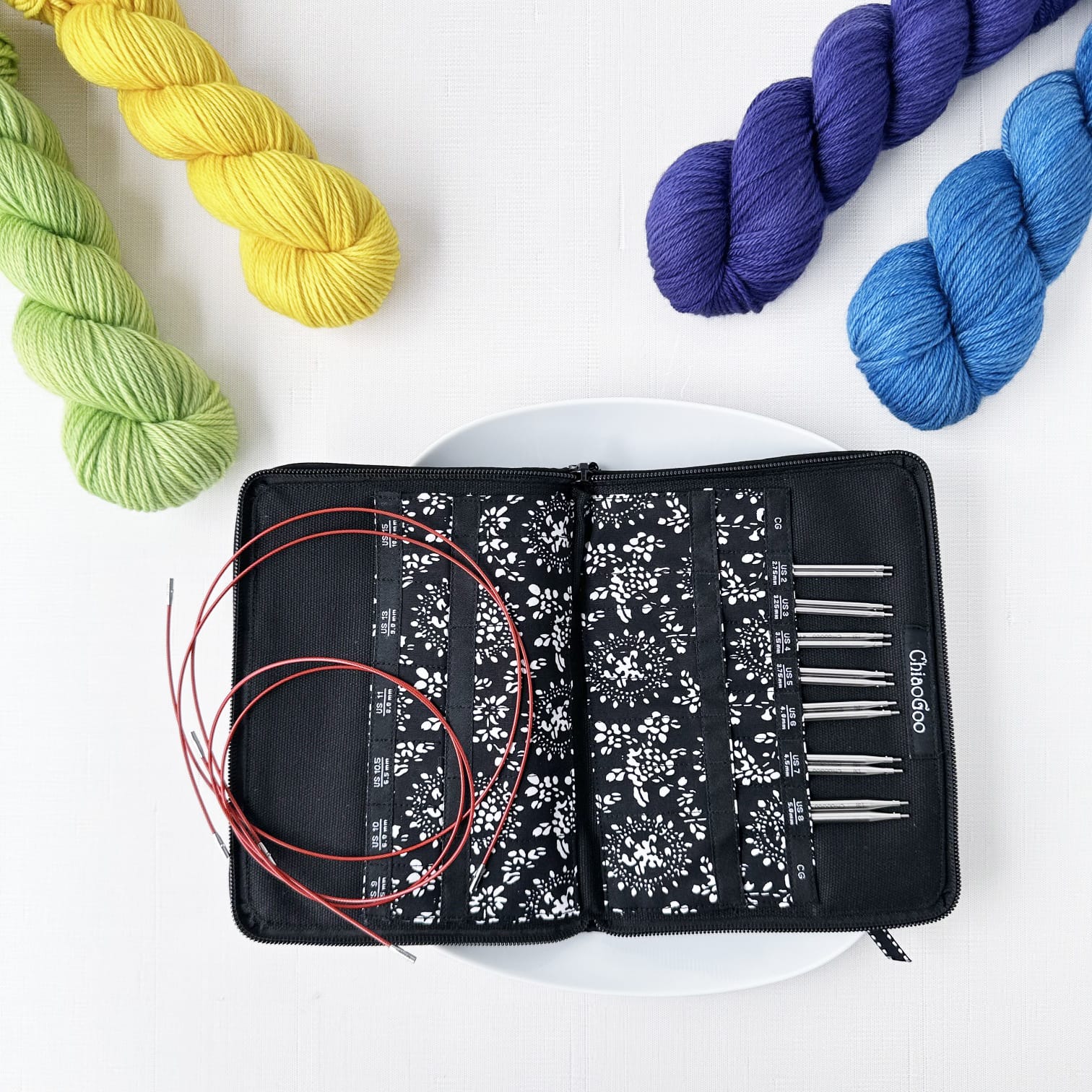







One of the most common questions we hear at Loop is, "What's the best yarn for a beginner?"
There are thousands of yarns available today, from wool and cotton to silk, bamboo, and acrylic. While many of them can be used successfully, some are much easier to learn with than others.
After helping hundreds of new knitters get started, we've found that the best beginner yarn isn't necessarily the softest, most expensive, or trendiest. It's the yarn that removes obstacles while you're learning a new skill.
Our recommendation: For your first knitting project, choose a smooth, light-colored, chunky-weight wool yarn that doesn't split easily. At Loop, we often recommend Ewe Ewe Baa Baa Bulky with US 10 (6.00 mm) straight knitting needles. This combination makes stitches easy to see and gives new knitters a comfortable way to practice.

Why the Right Yarn Matters
Knitting isn't difficult, but it does require patience.
Learning to knit is a lot like learning to write the alphabet. You're using your hands in a new way, and it takes time to build muscle memory. At first, your hands may feel awkward and your movements may feel slow. That's completely normal.
At the same time, you're also learning how to read your knitting. New knitters need to learn what knit stitches and purl stitches look like, how to identify mistakes, and where to place the needle correctly.
The right yarn makes all of those things easier.
The Best Yarn Weight for Beginners
When teaching beginning knitters, we typically recommend Baa Baa Bulky from Ewe Ewe Yarns.
Many beginners assume that bigger yarn is always easier, but there is actually a sweet spot.
Very thin yarns can be difficult to see and take longer to knit. Because progress is slower, beginners sometimes become discouraged before they finish a project.
On the other hand, extremely thick yarns often require oversized needles that can be awkward to hold and maneuver.
A chunky-weight yarn worked on a US size 10 needle strikes a nice balance. The stitches are easy to see, projects grow quickly, and the needles are comfortable to hold.

Choose a Light Color
If there's one piece of advice we wish every beginner would follow, it's this: choose a light color.
Light-colored yarn makes it much easier to see individual stitches and understand what's happening on your needles.
We once had a student who wanted to learn with a navy blue yarn. We encouraged them to choose a lighter color, but they were determined to use navy.
As the class progressed, they struggled to see their stitches. They frequently inserted the needle in the wrong place and accidentally added stitches without realizing it.
When they returned for the second class, we reviewed their work and suggested trying a lighter blue. After switching colors, they immediately had an easier time seeing the stitches, and their knitting improved dramatically.
Dark colors can be beautiful, but they're rarely the best choice for a first project.
Why We Recommend Wool for Beginners
When it comes to fiber content, wool remains our first choice for new knitters.
The biggest advantage is elasticity.
Wool has natural stretch and bounce, which makes it more forgiving as you learn. If your tension isn't perfectly consistent yet—and it won't be—wool helps smooth out some of those variations.
Plant fibers such as cotton and linen don't have much elasticity. They can certainly be knit successfully, but they often feel less forgiving in beginner hands.
Similarly, very drapey fibers such as silk or bamboo can sometimes be more challenging to control when you're still developing your technique.
That's not to say these fibers are bad. They simply ask a little more of the knitter.
After years of teaching classes, our recommendation hasn't changed. Wool consistently gives beginners the smoothest learning experience.
Avoid Yarns That Split Easily
Another reason we like Baa Baa Bulky for beginners is that it doesn't split easily.
When a yarn splits, the needle can accidentally pass through part of the strand instead of the entire stitch. This creates frustration and confusion for new knitters who are already trying to learn several new skills at once.
A smooth, well-constructed yarn helps beginners focus on learning the mechanics of knitting instead of fighting with the yarn.
Don't Let Your First Project Be Too Ambitious
One of the biggest challenges for new knitters isn't choosing yarn—it's choosing a project.
We all learn at different speeds, and we never want to discourage anyone from making something they're excited about. However, we've found that beginners often have more success when they start with simpler projects than they originally planned.
The goal of your first project isn't perfection.
The goal is to build confidence.
Every row you knit helps develop muscle memory. Every stitch teaches your eyes what knitting should look like.
Starting with something manageable helps you accumulate those small successes more quickly.

Our Recommendation for Your First Knitting Project
If a complete beginner walked into the shop today and asked what to buy, this is what we'd recommend:
- A chunky wool yarn such as Baa Baa Bulky
- A light color
- US size 10 knitting needles
Before making a project, we'd suggest casting on 20 stitches and creating a simple practice swatch.
Spend some time knitting and purling without the pressure of the fabric needing to become something. This allows you to focus entirely on developing muscle memory and becoming comfortable handling the needles and yarn.
Once you're feeling confident, move on to a simple scarf that uses basic stitches to reinforce what you've learned. One of our Favorite Scarves patterns is a great place to start. These patterns use only knit and purl stitches, helping you build confidence while making something beautiful.
Simple baby blankets can also be excellent beginner projects because they rely on straightforward stitch patterns while giving you plenty of practice.
Final Thoughts
The best yarn for beginner knitters is one that makes learning easier, not harder.
A light-colored chunky wool yarn gives you visible stitches, comfortable needles, steady progress, and forgiving fiber—all things that help new knitters succeed.
Most importantly, remember that knitting is a skill. Like any skill, it takes practice.
Be patient with yourself, start with the right materials, and focus on learning rather than perfection. The confidence will come one stitch at a time.
Want to learn to knit with us?
If you'd like a little hands-on guidance, join us for a Quick Start Knitting class or our Learn to Knit Series beginning class, Knit 1: A Neckwarmer at Loop in Philadelphia. You'll learn the basics in a small, supportive class, with plenty of individual help to get you started.